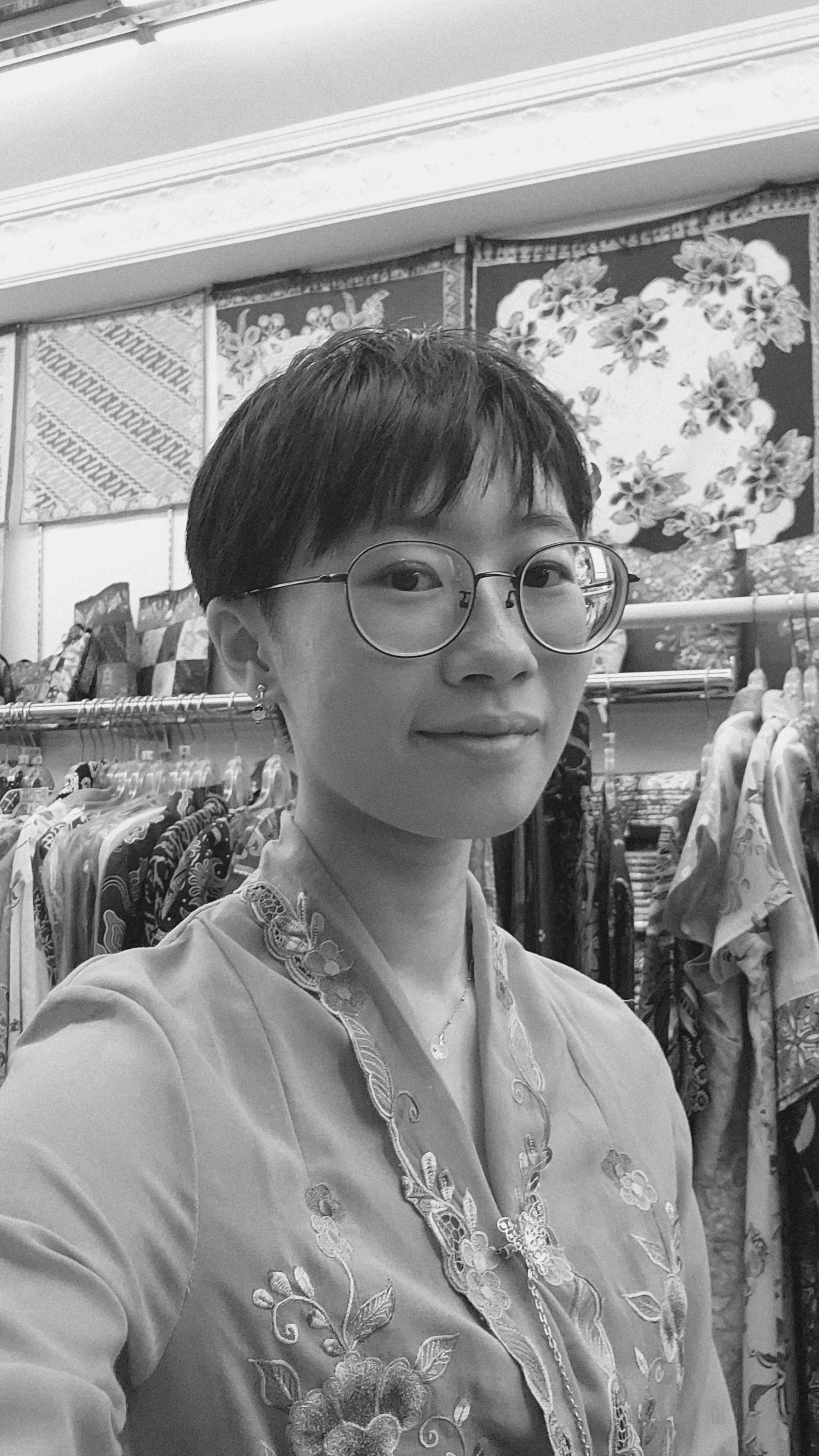
As part of our Inside the Archives series, which explores the experiences and insights of professionals working across the heritage sector in connection with archives, we spoke with Annemarie Evans about her distinguished career in broadcasting and her recent oral history work in collaboration with History Ink.
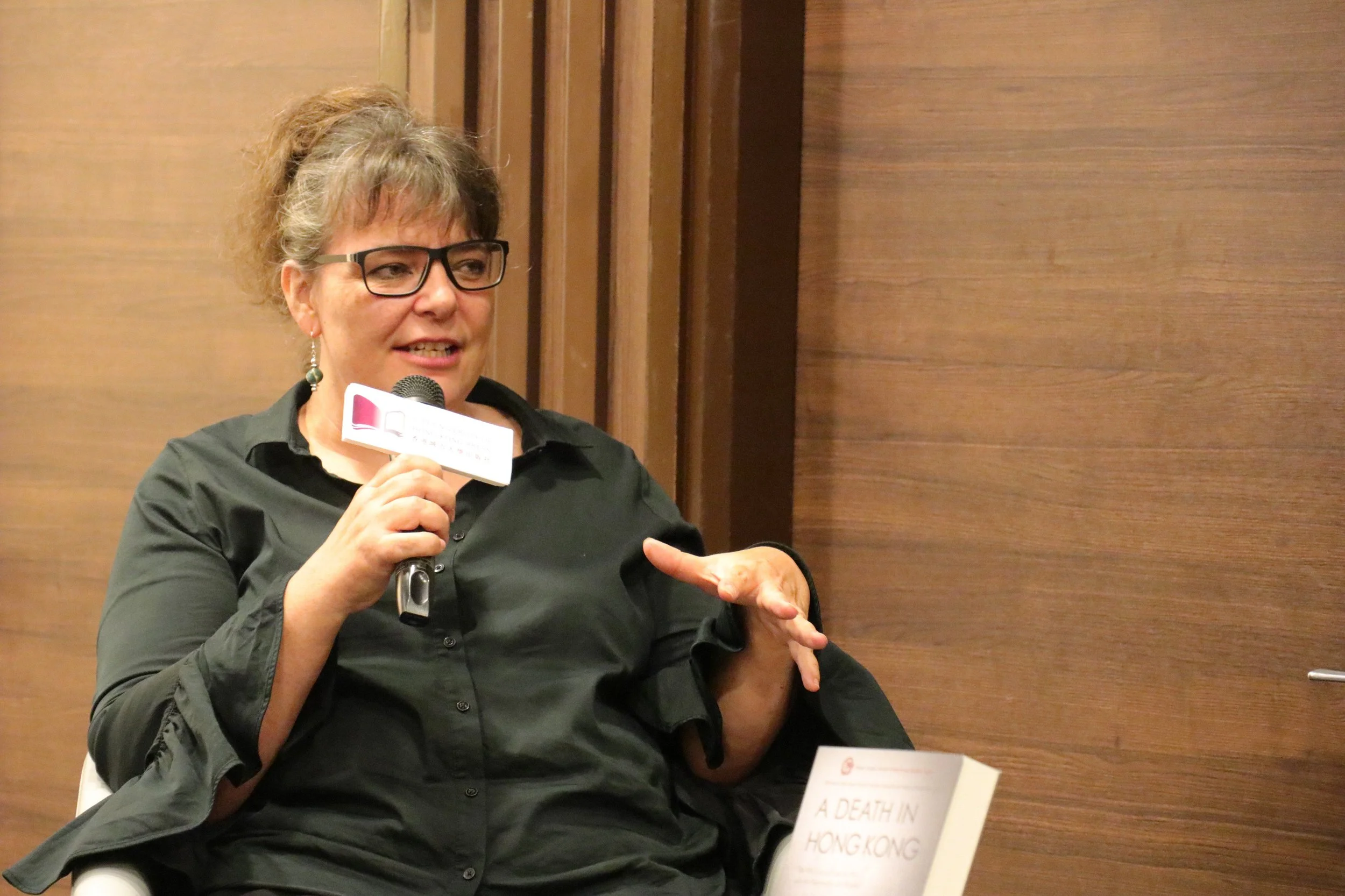
Annemarie speaks at an event in Hong Kong. Courtesy of Annemarie Evans.
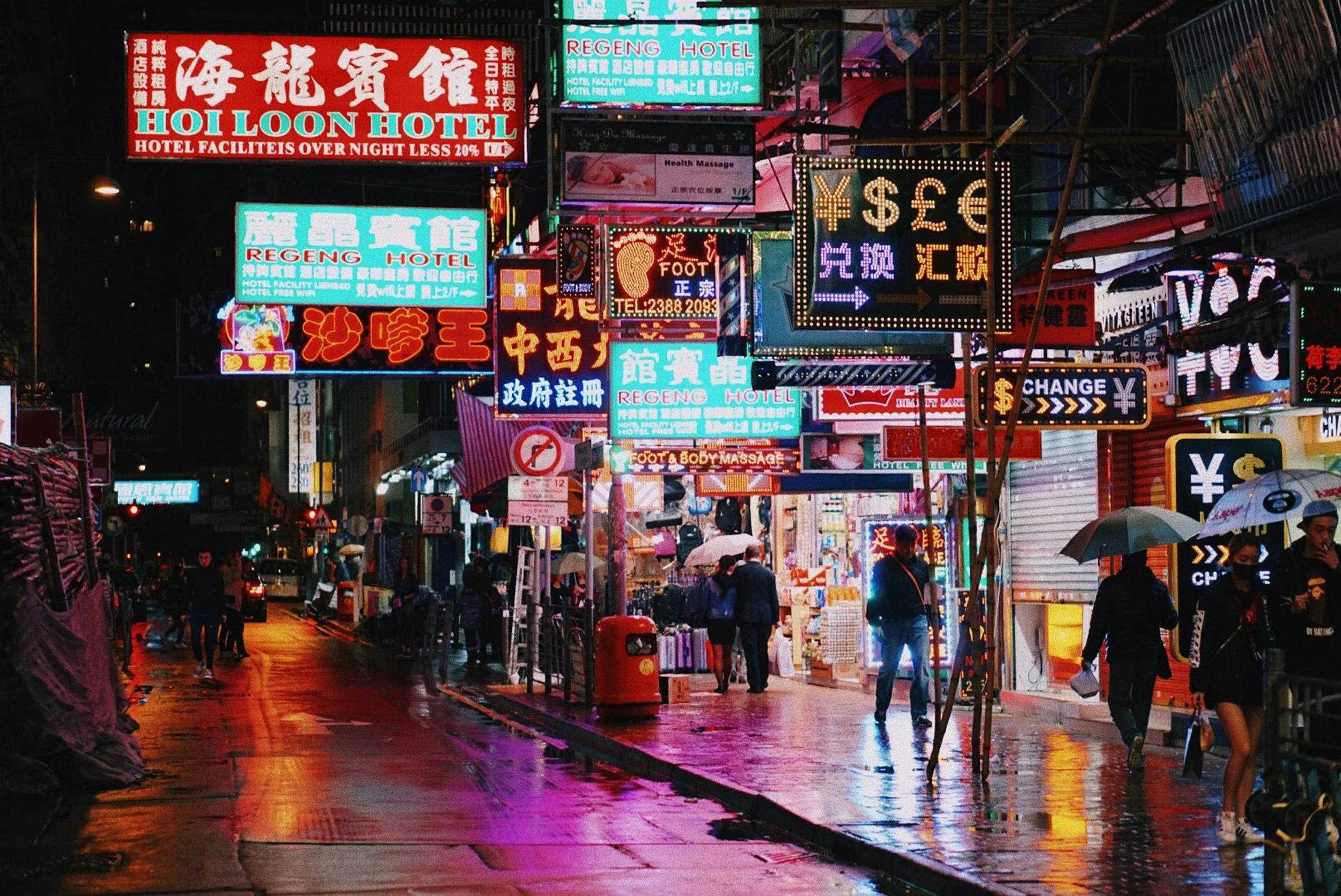
Hong Kong at night. Courtesy of Nic Low.
Q: What was the definitive moment or early experience that made you realise broadcasting was the path you wanted to pursue, particularly within the Hong Kong context?
This is a fun question actually, because it made me think of a cassette tape that I recorded at the age of nine, where I’m the newsreader, producer, and presenter – and I thank my father and mother for providing the tea and biscuits and not speaking during the recording! Nearly 20 years later, in the Hong Kong context, there were two opportunities that presented themselves while I was working at the South China Morning Post newspaper in the late 1990s. I was a reporter and sub-editor on an early Internet edition of the newspaper. One of my colleagues, who headed up the news desk, would speak every couple of weeks to Radio Five Live in London, providing details on three Hong Kong news stories and one British story that had made it into the Hong Kong news and would chat with the DJ at what was 5am or so in the UK – so an early morning programme. She went away on holiday and I covered for her and I remember doing that and finding the baptism of being on live radio very nerve-racking.
At a similar time, a newspaper colleague, who was a freelance journalist, was leaving Hong Kong. She reported for the Post but also was the producer and presenter of a weekly programme called Hong Kong Heritage for Radio 3, RTHK, so Hong Kong’s government radio station, and the English-language channel. This ran for just under 15 minutes on a Saturday morning and Sunday evening and was pre-recorded. These were the kind of opportunities you could get in Hong Kong. She quite literally handed me the recorder, I got the okay from the Post editor at the time Jonathan Fenby and started at RTHK on a freelance contract. Fenby felt that through my work I would also bring in feature ideas for the Post, which is what happened.
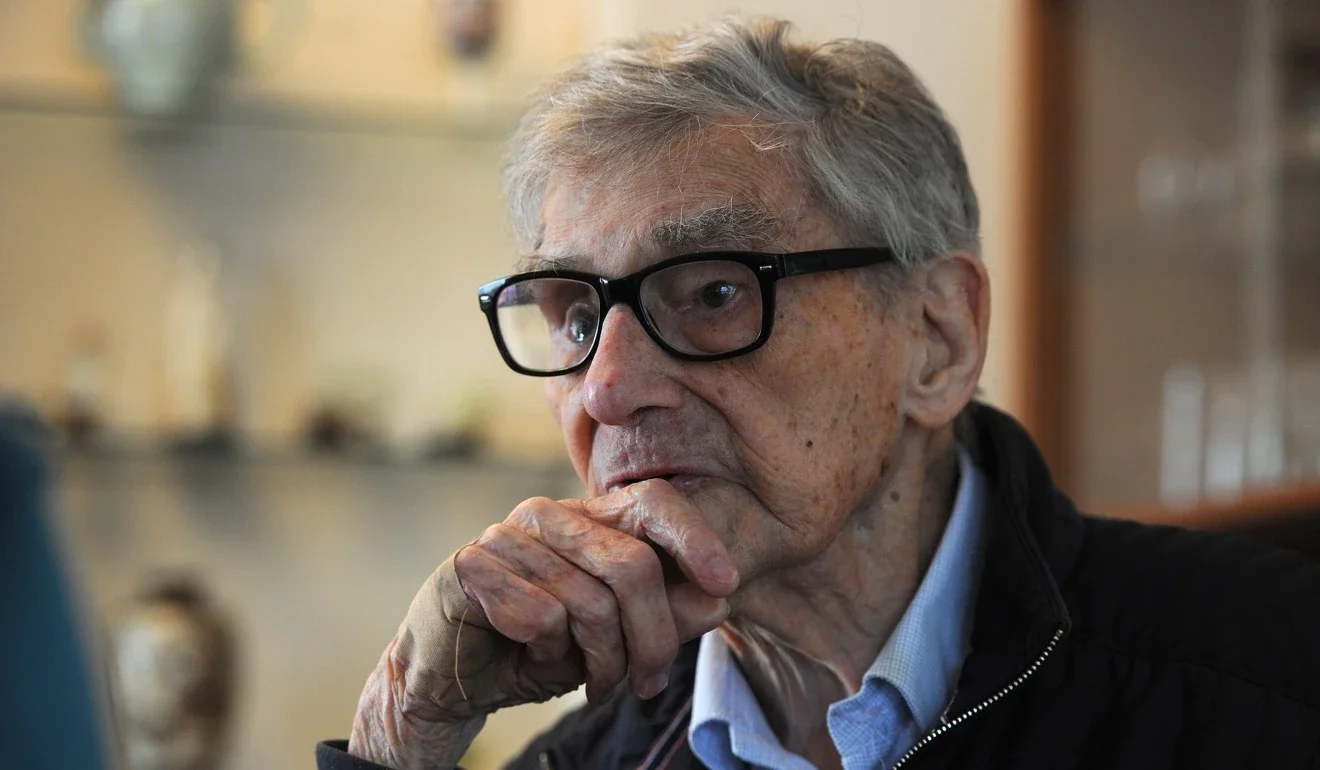
Michael Wright. Courtesy of Wiki.
Q: How has your experience with broadcasting, journalism and oral history influenced one another in your field of work?
I wouldn’t say that my programmes have been oral history – in the sense that oral history is often an hours-long process or you meet the interviewee for several sessions. There were some interviewees who I did meet several times to get the full story – these included the incredible Michael Wright, who was my oldest interviewee at 105 years old, who was born on The Peak in 1912 and died in early 2018. But in most cases it was often on one occasion. While there is an oral history aspect, you were often searching in the interview process for key elements for a 15 minute - and later (post 2015) a half-hour programme, so it was about entertaining the listener, providing a story, but not necessarily encompassing a life – more a part of that life. The journalism aspect could be that it was the anniversary of a specific event, and I was reporting on that. But other journalism skills that came into play, of course, were to fact check as much as is possible with a personal account. People’s memories are not always 100 per cent reliable over time; they can be subjective; and if it is a circumstance such as, for example, the Battle of Hong Kong in December 1941, then you can fact check with historical facts and other accounts. If it is a personal account – someone’s childhood and there is nothing to cross-compare then you rely on that account.
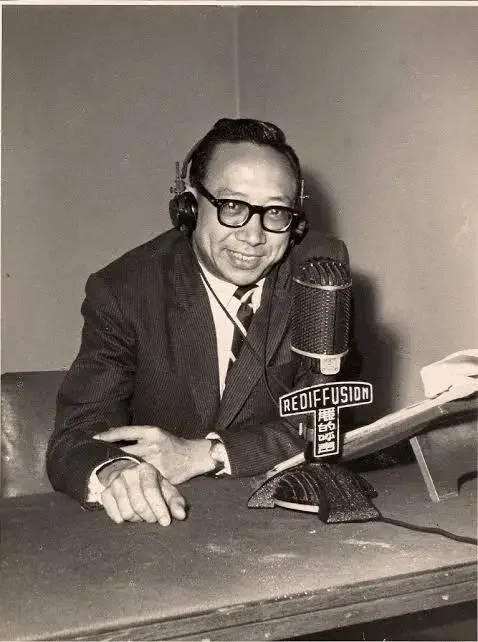
Ray Cordeiro (1924 - 2023). Courtesy of Hong Kong Heritage on Radio 3 RTHK.
Q: Which part of the interview process feels most rewarding to you personally?
I think when you realise that the interviewee has settled in, trusts you and is starting to fully share. Also when you take the interviewee off the beaten track – say if they have a story that they have told before, you can sense that, as they will go along familiar lines. But there is a joy to asking them aspects that are new, and they will also get satisfaction from that. He died a few years ago, but there was a very well-known DJ in Hong Kong - Ray Cordeiro or Uncle Ray as he was known, very popular evening DJ and many Hong Kong taxi drivers talked about how he taught them English by presenting his songs on air. Ray met The Beatles three times in one week - a true story, and one he loved to tell. It ran along grooves like a classic LP, and had been honed and polished over the years. Uncle Ray was a broadcaster for 70 years and I interviewed him multiple times. And the best part was when I asked him questions, where I would get a fresh response - about his father, or his early career, or a certain pop star.
Q: What is the most challenging aspect of interviewing someone when the subject matter is sensitive or emotionally heavy, and as an interviewer, how do you help them navigate that space?
Give them time. In fact this is for all interviews – always allow plenty of time for an interview – often you’ll get the best bits when the interviewee has grown comfortable with you and doesn’t feel rushed. Look after their wellbeing. I’ve interviewed WWII veterans and 50 years on the memories remain painful and stark. Or women who were married off in New Territories villages in Hong Kong and had unhappy marriages. Allow time. Sometimes it is easier talking to you than it would be their families. Look after them – but don’t interrupt. So if they are crying, gently have a box of tissues there, but let them tell without you reacting too much. You can be sympathetic, but you are not looking to interrupt their flow. Be comfortable with staying silent on your side. And then some gentle prompts when required. Then afterwards you can gently bring them back to the present with easier questions for them to answer. Plenty of eye contact as they tell you their story.
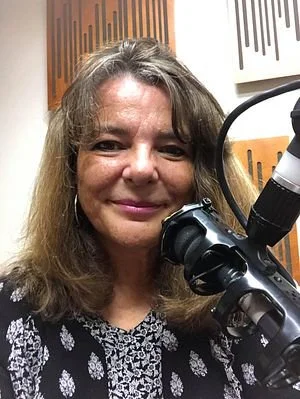
Annemarie in the studio. Courtesy of The Diplomat.
Q: Reflecting on your past career experiences, which broadcasting or heritage project stands out the most?
That’s a tough one – as I’ve done it for 30 years! Oh, for sheer energy and excitement – 2010 – walking on to the pitch at the Queen Elizabeth Stadium as Rugby 7s winners Samoa stood in the middle of the pitch and the crowd roared. It was sensational to be recording that. Then afterwards, I was given the opportunity to go back with them to their locker room, where they prayed and sang religious songs, which was also quite a privilege to record.
Q: You recently worked on a school anniversary project for History Ink, interviewing people who were formerly connected with the school. In institutional projects, interviewees may feel a strong sense of loyalty to the organisation. During your interviews, how do you create a safe space for them to share more complex or critical reflections that might fall outside the 'celebratory' nature of a project like an anniversary?
Often an anniversary will spark the process which leads to history research and oral history projects being conducted with an institution. I would say in most cases you can make it a two-layered process. There is the information that will be used for the commemoration or celebration, the book, the video, the soundbites, or the exhibition panels that mark the heritage of the institution for public consumption. Then there is the wider information that while not used for the reduced exhibition etc is very useful for the institutional knowledge and history of that particular school, bank, firm etc.
In terms of staff members – how I have done it in the past is to make that clear and also with the marketing team, that they only use information that has been permitted by that staff member. Also those staff members have been provided with a transcript to check for accuracy, and that gives them an opportunity to see what they have said. But I think a clear agreement does need to be made between the institution and the marketing team on how that information will be used – what is for the public, what is for archive, and that particularly for staff members who have been there for a long time – their experience and advice are useful learning tools for that institution.
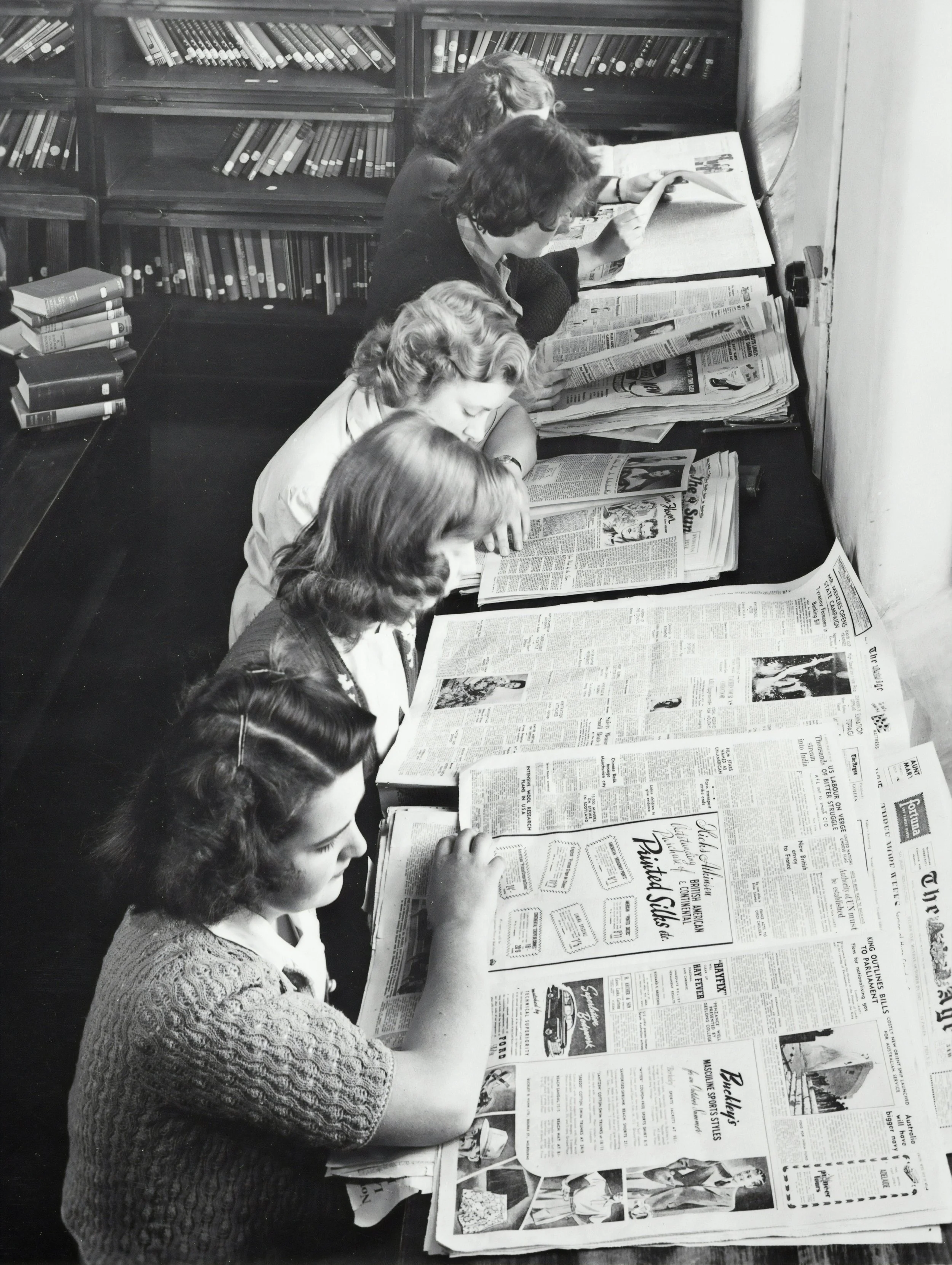
Reading the dailies. Courtesy of Museums Victoria.
Q: What advice would you give to young people looking to enter the broadcasting and journalism field today?
It’s a very different environment from when I became a journalist more than 30 years ago. In some ways much more challenging. Many of the radio stations and newspapers have gone. Everyone has access to a mic or can record with their phones. While that has led to some good “citizen” reporting, it’s not the same as being trained as a journalist and doing the various news beats in a radio station or newspaper. That said - take the challenge! I didn’t study journalism at university but I got my apprenticeship at two newspapers. If you have the opportunity to study, take it. And just because there are fewer mainstream media outlets, doesn’t mean there aren’t many, many stories to be told. In fact, many of them aren’t being told - so find those stories and enjoy the chance to hear about people’s lives and experiences.

An interview in progress. Courtesy of leuchtturm entertainment.
Q: What in your view is the difference between conducting oral history interviews and broadcasting?
Oral history - you’re looking to get far more detail from beginning to end and all in between. Broadcasting - you’re looking for a main story - so if I’m interviewing a WWII veteran for a programme, I don’t care what job he did afterwards or that he has grandchildren. What battle was he in, what did it feel like, how did he cope with being a prisoner of war. Nowadays, with podcasts, broadcasts are sometimes longer - but generally you have a few minutes to tell a tale. Whereas oral history can be far more wideranging with the details of a life.