In 2021, History Ink was invited to curate an exhibition for the Goethe-Institut Hong Kong, exploring the little-known history of Jewish refugees who escaped Nazi persecution in Europe and sought sanctuary in Hong Kong during the 1930s and 1940s.

The exhibition featured reproductions of letters written to refugees by Lord Lawrence Kadoorie and Sir Horace Kadoorie, from the Hong Kong Heritage Project Archive.
Titled Jewish Life in Germany and Escape Destination Hong Kong, the exhibition opened in November 2021 and brought together previously unseen photographs, oral histories, personal accounts and historical documents from the Hong Kong Heritage Project (the Kadoorie family's archive), alongside collections held by archives and private individuals around the world. Through extensive archival research and the careful curation of historical materials, History Ink developed a narrative revealing Hong Kong's often-overlooked role in the Jewish refugee experience during the Second World War.

Visitors explore interactive displays.
During the late 1930s, Hong Kong became an important transit point for thousands of Jewish refugees fleeing Nazi Germany and Austria en route to Shanghai, one of the few destinations that remained accessible to those escaping persecution. While most passed through the colony, approximately 120 refugees settled in Hong Kong before the outbreak of the Pacific War, often finding employment through the assistance of the city's established Jewish community.
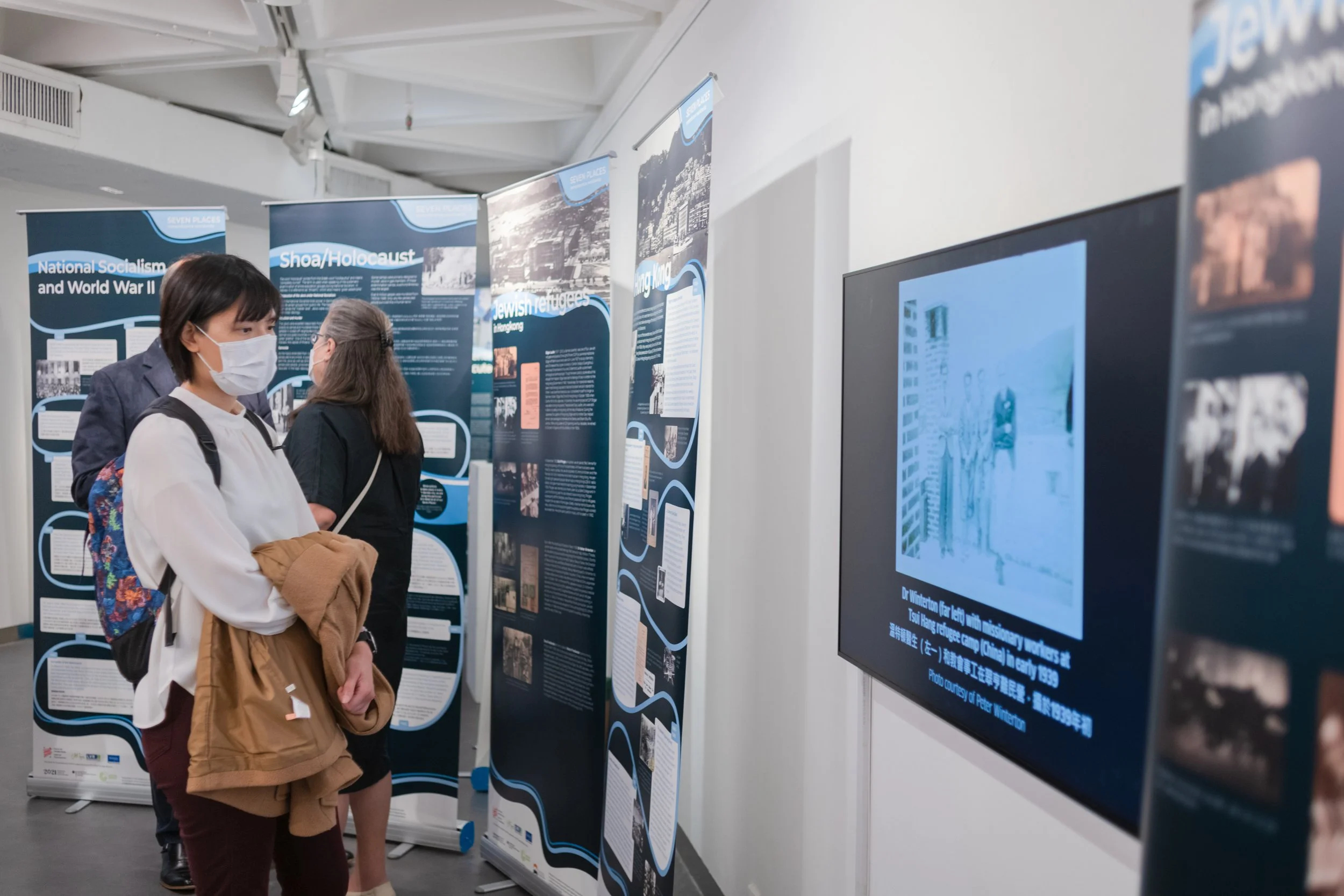
An exhibition film was created using photographs sourced by the Hong Kong Heritage Project and History Ink.
The exhibition explored the remarkable stories of individuals who found refuge in Hong Kong, including those assisted by prominent Jewish businessmen such as Lord Lawrence Kadoorie of China Light & Power and Aaron Landau, proprietor of Jimmy's Kitchen. The exhibition also examined the difficult circumstances faced by refugees following the outbreak of war in Europe in 1939, when German and Austrian Jewish refugees were interned as 'enemy aliens' by the British colonial authorities. Following the Japanese invasion of Hong Kong in December 1941, those who remained endured further hardship and uncertainty.
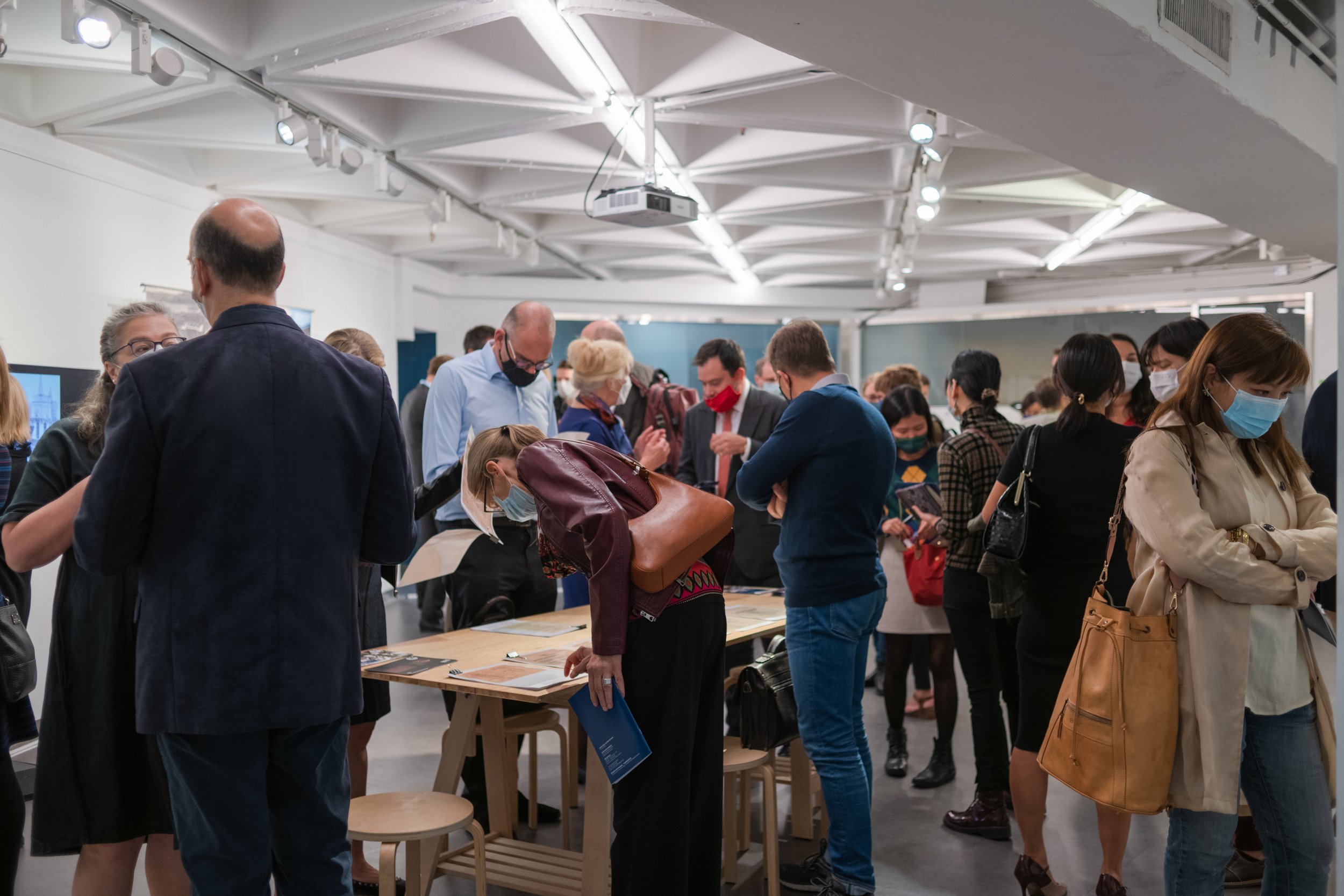
The exhibition was opened in Autumn 2021 and hosted at the Hong Kong Goethe-Institut.
One particularly poignant story concerned The Peninsula Hotel, which became a temporary home for nearly 300 Jewish refugees travelling from Shanghai to Australia after the war. In 1946, the hotel's ballrooms were converted into makeshift dormitories, providing accommodation for refugees stranded in Hong Kong for six months while awaiting onward passage.
History Ink's curatorial work included historical research, exhibition script development, archival image sourcing and the preparation of an accompanying exhibition brochure. The team also sourced and recorded oral histories for an exhibition film reel, bringing personal voices and experiences into the historical narrative. The exhibition was brought to Hong Kong by the Center for Persecuted Arts in Solingen, the Holocaust and the United Nations Outreach Programme, the German Consulate General in Hong Kong and the Goethe-Institut.
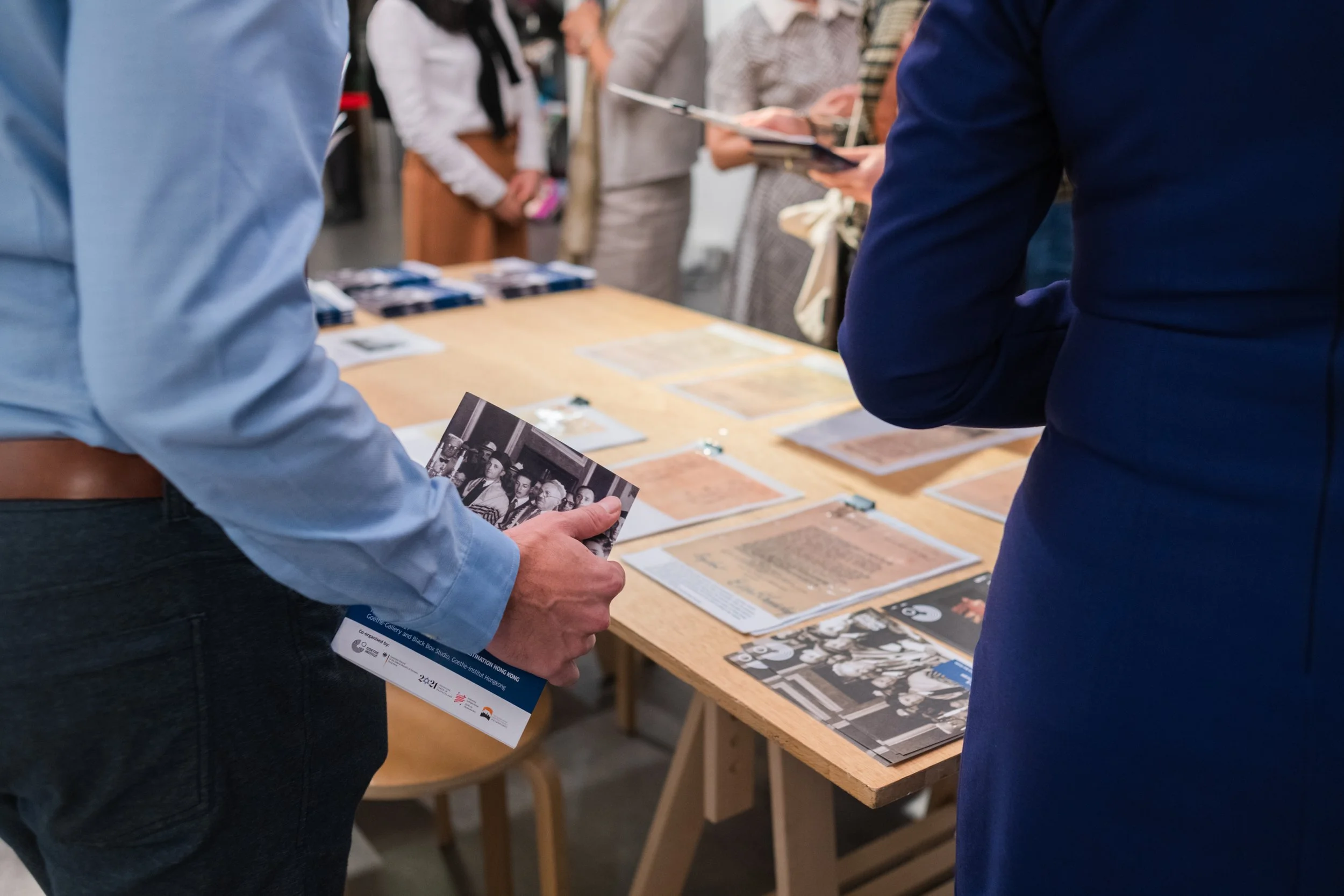
A visitor with the exhibition booklet.
History Ink's Dr Amelia Allsop was interviewed by Tamar Herman of the South China Morning Post about the exhibition and her research behind these previously little-known refugee stories.