
Archivists can often seem mysterious, conjuring images of individuals working alone in dimly lit rooms, sifting through dusty boxes and uncovering long-forgotten artefacts. However, in reality, the profession involves a far broader range of skills and responsibilities than this stereotype suggests. Whether that is preserving historical records, leading research initiatives, curating exhibitions, digitisiting collections or managing archives, each of these skills is vital. In this interview, we aim to demystify the profession and gain an understanding of the practicalities of being an archivist.
To learn more, I sat down with History Ink archivist Ka Wai Chan to discuss her journey into the profession as well as her experience working across different stages of the archival process.
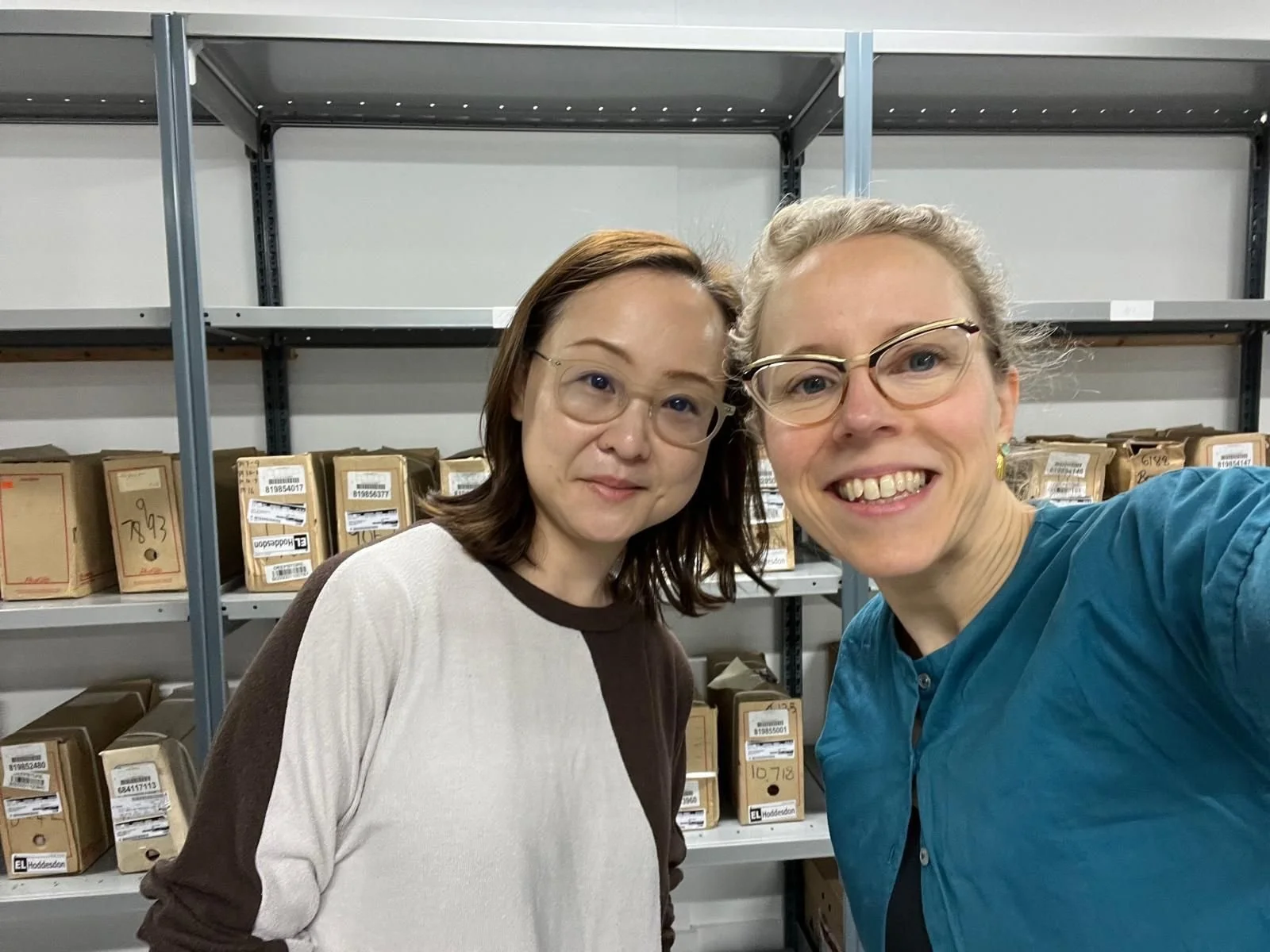
Ka Wai Chan (left) working in the archives alongside History Ink Founder Helen Swinnerton.
Q: What led you to become an archivist after starting your career in marketing and communications?
My route into archives was not a conventional one. I spent many years working in marketing and communications, and later in editorial and publications roles, primarily within the arts sector. While I enjoyed the creative side of that work, I increasingly found myself drawn to the historical materials behind organisations – the documents, photographs, programmes and records that reveal how institutions evolve over time.
Working with performing arts organisations sparked a growing interest in preserving cultural memory. I realised that archives are not simply about storing old records; they are about safeguarding stories, context and evidence for future generations. That interest eventually led me to pursue formal archival training and complete a Master's degree in Archives and Records Management.
Looking back, I find that archives and communications share a common purpose. Whether through records, music or the arts, both disciplines are ultimately about storytelling and helping people discover, understand and connect with information
Q: Which stage of the archival process do you find most rewarding, and why?
There is a Chinese proverb, 釣勝於魚 – literally, “fishing is better than the fish”. In other words, the journey can be more rewarding than the destination. For me, the most rewarding stage is cataloguing.
At first glance, cataloguing can appear highly technical, but it is where an archivist begins to understand a collection in depth. It involves examining records, identifying relationships between them, and creating descriptions that allow future researchers to find and interpret the material. I particularly enjoy the detective work involved – uncovering connections and piecing together context from seemingly unrelated records.
Being both an editor and an archivist has also given me opportunities to engage directly with users. I still remember a couple, loyal audience members of the Hong Kong Philharmonic Orchestra, approaching me during an interval to say how much they enjoyed reading the performance history notes for each work and the archival stories featured in the house programme. Knowing that archival research had enriched their concert experience was especially rewarding.
Q: Which archival project have you been most proud of, and what made it particularly meaningful to you?
One project that stands out is my work helping to establish the Hong Kong Philharmonic Orchestra’s first formal archive, and later serving as editor of its 50th-anniversary publication.
The project was especially meaningful because it brought together several of my professional interests: archives, historical research, writing and the performing arts. The orchestra’s history is closely intertwined with Hong Kong’s wider cultural development, and it was fascinating to trace that story through concert programmes, photographs, administrative records and oral histories. It also demonstrated how archives can actively contribute to an organisation’s identity and deepen public understanding of its history.
Q: What are the biggest practical differences between working with performing arts archives and more traditional historical collections?
The biggest difference is that performing arts archives document something fundamentally live and ephemeral. Unlike many historical collections, which often preserve records of completed events or activities, performing arts archives attempt to capture experiences that existed only in a specific moment and place.
A recording, photograph or programme can provide valuable evidence, but it can never fully recreate the experience of being in the concert hall or theatre. For example, listening to a recording of a Beethoven symphony is very different from hearing it performed live, just as a filmed ballet cannot completely convey the atmosphere of a live performance with orchestra and dancers sharing the stage.
This means archivists must preserve not only the official records of a performance, but also the context surrounding it – audience reactions, reviews, production materials and other evidence that helps future researchers understand what the live experience may have been like. In many ways, performing arts archives are an ongoing effort to document the undocumented.
Q: How have advances in digital tools changed your approach to archival cataloguing?
Digital tools and AI technologies are changing the way we think about archives and records management. Rather than viewing archives as something that begins years after records are created, organisations can increasingly build archival thinking into their everyday workflows.
I am interested in how digital tools can help arts organisations manage records more effectively from the point of creation. Better metadata, automated classification and AI-assisted discovery can improve administrative efficiency while also ensuring that historically significant records are identified and preserved early on.
In that sense, technology is helping to bridge the gap between records management and archives, creating a more sustainable approach to preserving organisational memory.
Q: What are the key steps in developing a historical narrative and telling a story from an archival collection?
Developing a historical narrative begins with understanding the collection’s strengths, gaps and context. Archives rarely provide a complete picture, so careful analysis and cross-referencing are essential. Rather than simply presenting records chronologically, I look for themes and patterns that connect the past to the present. For example, Beethoven’s Symphony No. 5 may have appeared in an orchestra’s programmes for decades, but archival records can reveal how its significance changed over time through different conductors, audiences and historical contexts. The key is to balance interpretation with evidence, bringing historical materials to life while allowing the records themselves to tell the story.