
The Past Comes Alive through Digital Storytelling
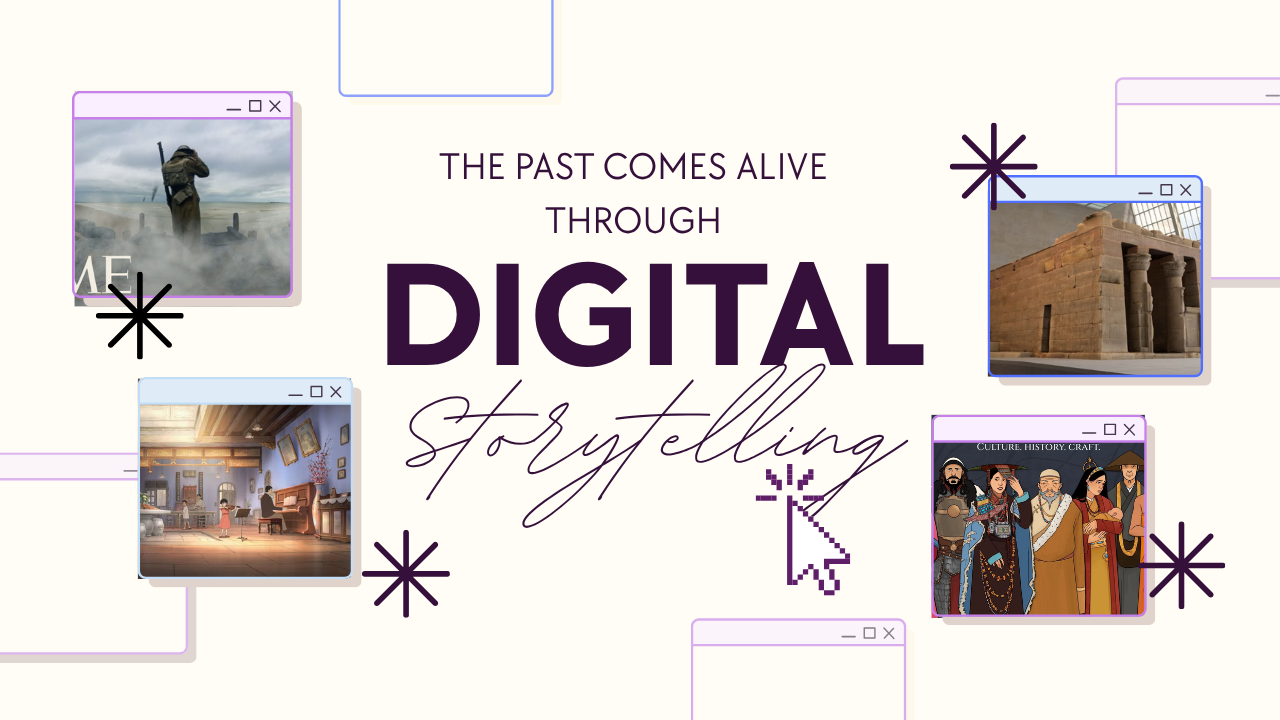
Storytelling has always been a special part of human nature. The power of stories to communicate abstract and complex experiences can create connections that bridge the gap between various ages as well as across the ages. A captivating story fosters empathy and sparks the imagination.
I suggest that the next step in the evolution of storytelling is digital storytelling– the use of digital media to enhance the stories we recount, which can include the use of images, audio, videos, animation, text and much more. Emotional engagement is what digital storytelling excels at. Stories captured in digital form tend to be short but memorable, able to bring personal tales to life and vividly recount historical events.
Digital storytelling is now everywhere. Over the past decades, many organisations and institutions have incorporated a wide array of technologies to convey their ideas. I would like to take a look at some innovative ways in which digital storytelling has been used to push narratives of history, culture and heritage around the world, asking exactly what benefits technology can bring for the stories we share about ourselves and others.
Since the world of digital storytelling is vast, this article only explores a tiny slice of its many possibilities. Let us take a look at AI, virtual and augmented reality, interactive museum exhibits, 3D scanning technology as well as animation – through these we can see that the imagination truly has no limit.
Capturing tangible heritage with Drone Scanning and 3D modelling
One form of digital storytelling has been through the use of drone scanning and 3D modelling to preserve tangible heritage spaces. This digitisation of historical sites not only preserves these structures in a sustainable and non-invasive way, but brings alive the history hidden within their walls.
In fact, you might not know that this technology has been used for the famous Netflix show Queen Charlotte: A Bridgerton Story. Here studio Visualskies captured multiple heritage sites across the United Kingdom to provide the VFX team with accurate 3D models for enhancing the digital sets for the backdrops of the show. This was done using LiDAR with high-resolution photogrammetry, which allowed for all the wonderfully intricate details of carvings and masonry work to be mapped out in a high-quality 3D model.
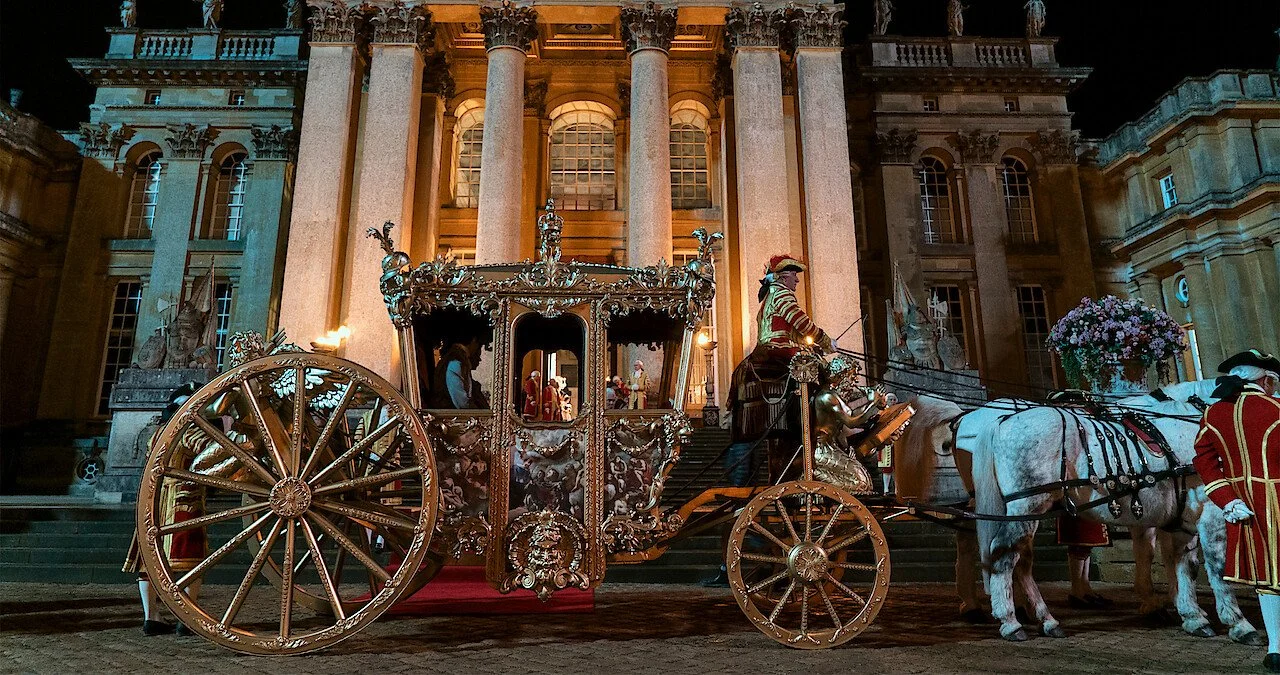
A scene from Queen Charlotte: A Bridgerton Story featuring an intricate backdrop and high attention to detail
Virtual tourism is also another avenue in which 3D modelling has been used in combination with storytelling narratives. This online tourism offers an appealing digital alternative to actual travel. Many heritage sites or museums now offer virtual tours of their facilities, allowing visitors worldwide to explore historic landmarks or museum exhibitions in high quality 3D from the comfort of their home. This also extends to the students within the classroom, who can partake on virtual excursions and interact with the sites online.
Recently, this has come hand-in-hand with Artificial Intelligence. For instance, The Met recently featured two virtual exhibitions powered by the metaverse platform Atopia, where you can explore history of the Temple of Dendur and the Arts of Oceania in virtual reality or on one’s web browser.
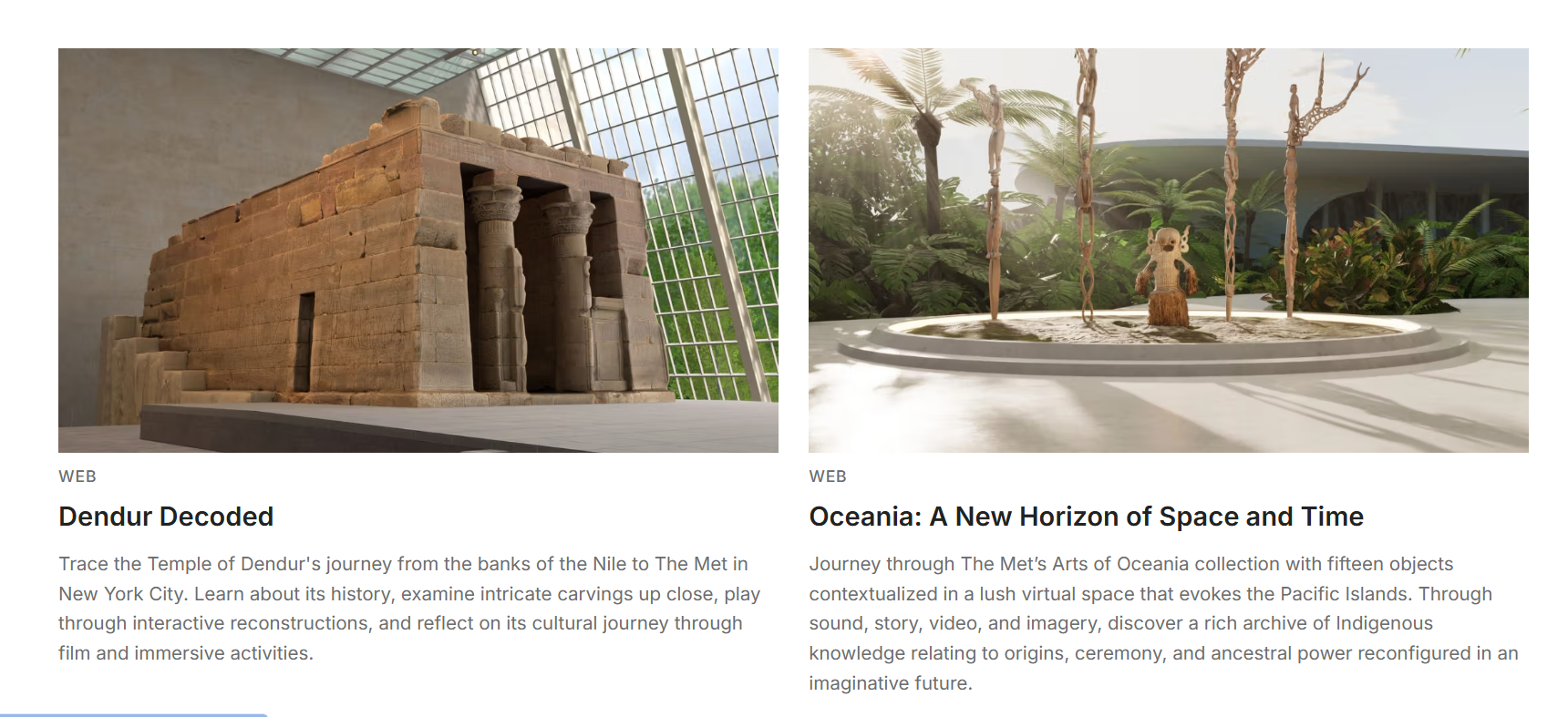
The Met features two virtual exhibitions powered by metaverse platform Atopia on its website, of the Temple of Dendur and the Arts of Oceania
The immersive worlds of Virtual Reality
3D modelling has also been used for Virtual Reality (VR), another digital storytelling tool that can audibly and visually transport the viewer to another place or time. Immersion is further enhanced by VR’s use of 3D head-mounted displays and motion tracking, which creates a simulated 3D environment for users to explore and interact with. Such technologies have become commonplace in the video game industry over the last few years, but an increasing number of museums and heritage sites have also sought to put this technology to good use.
Virtual reality allows one to experience history’s defining moments for themselves, or to see a place as it potentially was in the past. For instance, TIME’s recreation of the battle of Dunkirk cast users onto the beach with British forces as they waited to be rescued. Interestingly, this was created as a preview to the successful film by Christopher Nolan.
Computer game technology has also been modified into a technology platform Virtual Songlines to preserve, protect and present the cultural heritage of Aboriginal Australian Peoples.
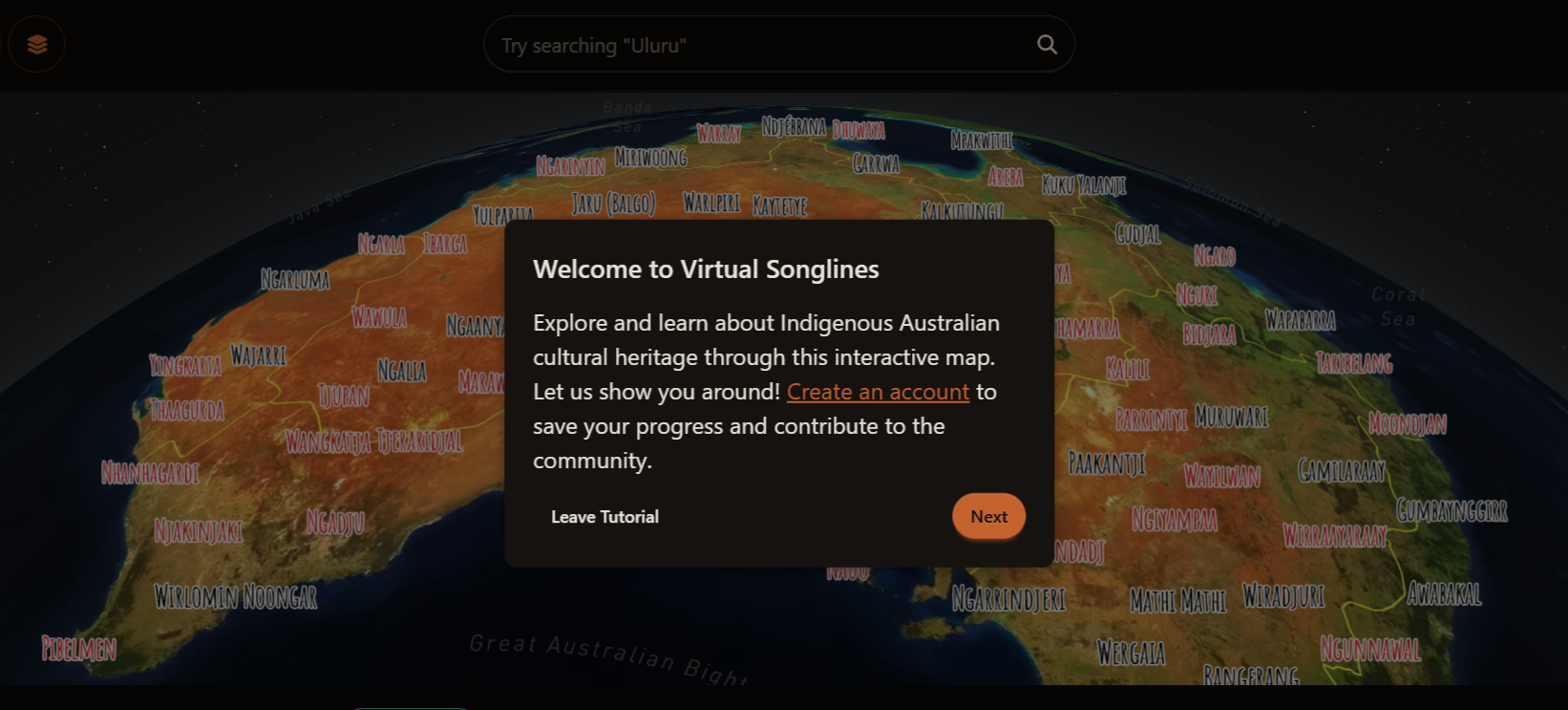
Virtual Songlines is a digital reconstruction of the pre-colonial Australian landscapes, and focuses on sharing the heritage of First Nations, including their languages.
Vividly imagining intangible cultural heritage in Animation
While preserving the physical tangible aspects of heritage is important, it is just as crucial to capture and represent the intangible aspects of culture. Cultural heritage goes beyond monuments and collections to include traditions, performing arts, social practices and other knowledge that communities recognise as part of their cultural identity.
This is where digital storytelling in the form of animation comes into play. Animation has been increasingly adopted in heritage interpretation, as it has proven time and again its ability to express intangible heritage in accessible and memorable ways, whether through fictional or non-fictional narratives.
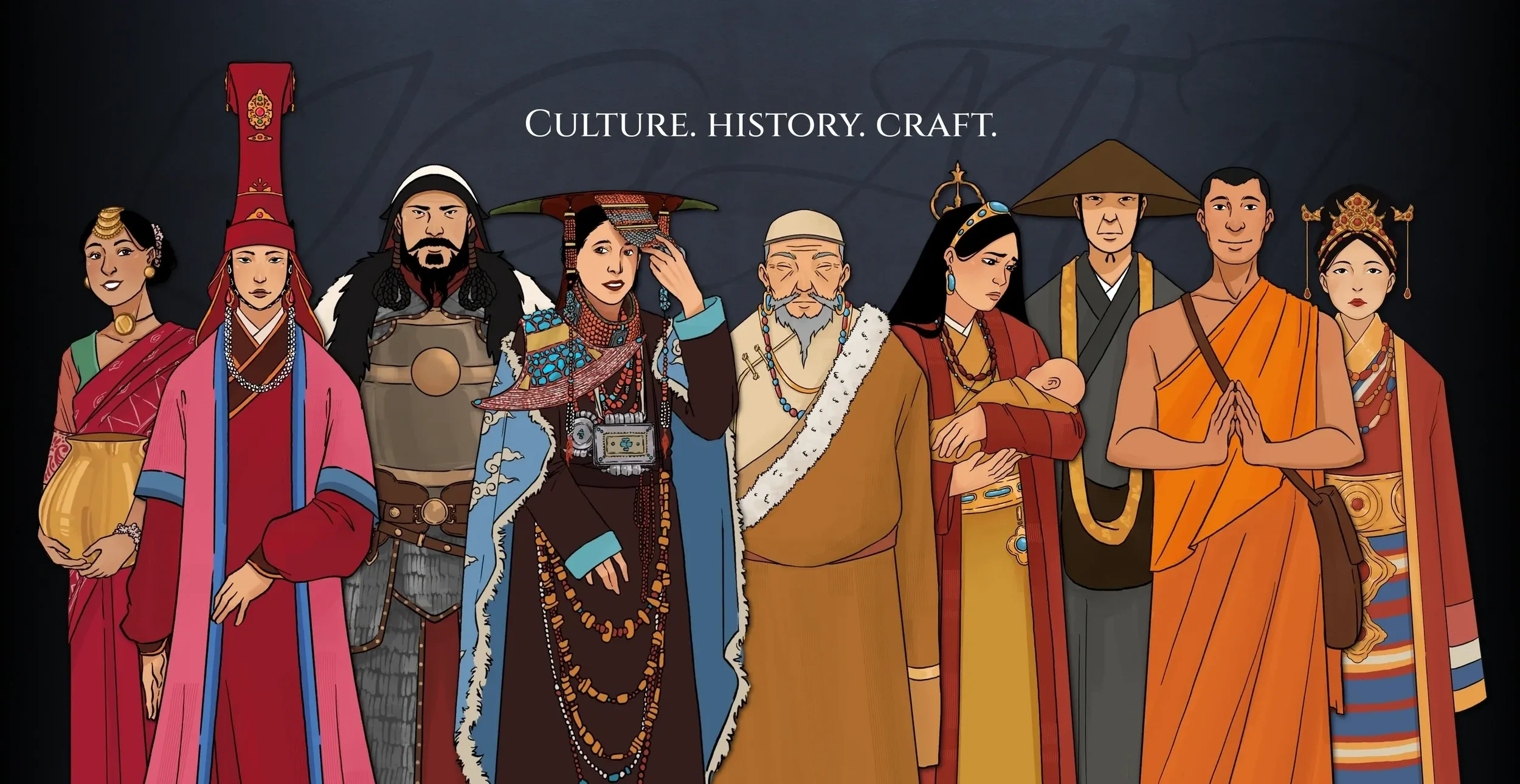
Ligature Historical Filmwerke is an animation studio that strives for compelling yet culturally faithful 2D animation. It has animated multiple historical documentary series including The Animated History of Buddhism and The Rise and Fall of the Tibet. See their Instagram https://www.instagram.com/ligatureanimation/.
As mentioned succinctly in an article by Michelle Connolly, animation has the potential to “make the invisible visible, showing the movements of traditional dances, the processes behind craft traditions, or the context of cultural rituals. This visualisation helps viewers understand not just what these traditions look like, but why they matter to the communities that practice them.”
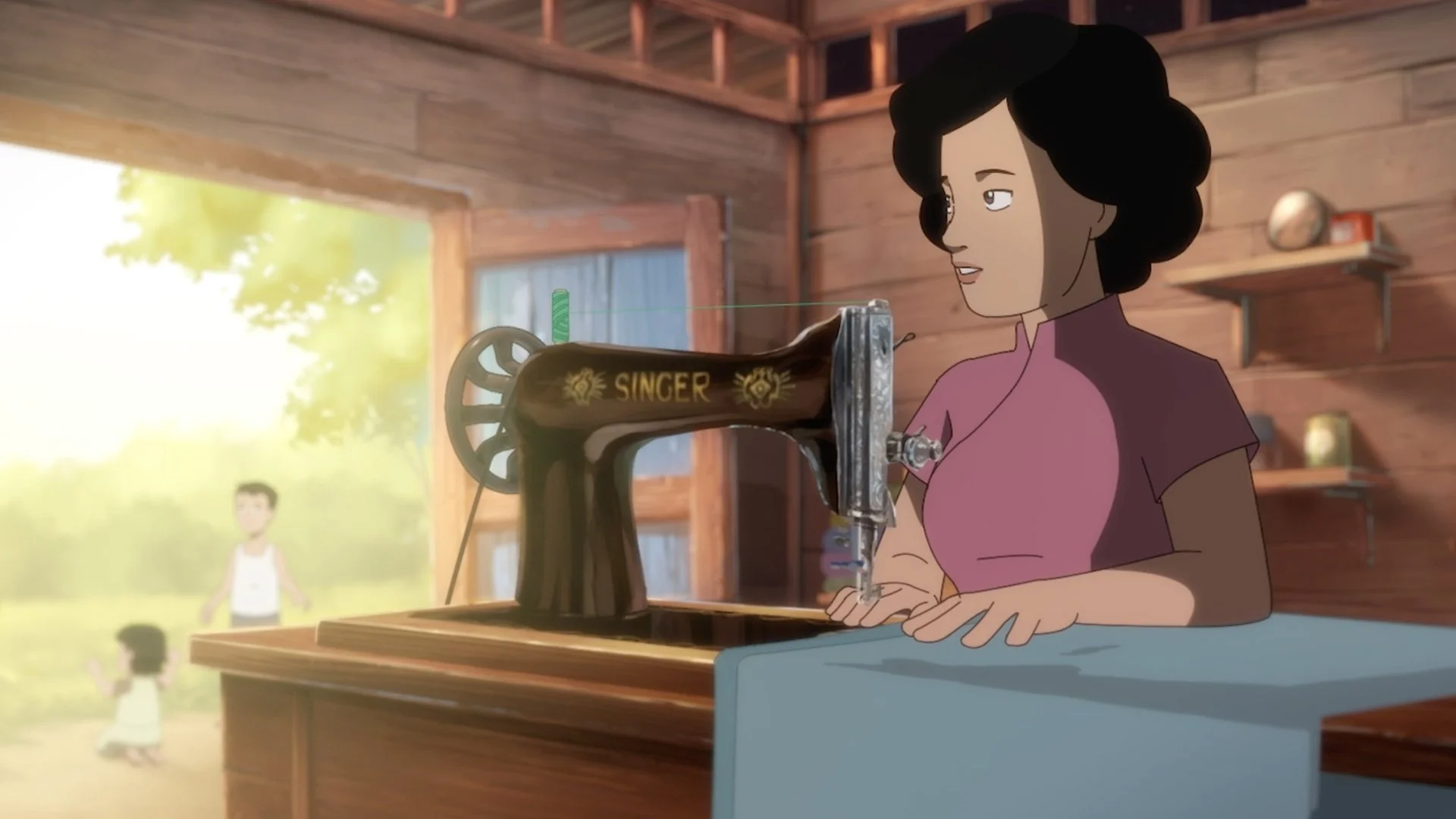
A scene about the Bukit Ho Swee Fire from Robot Playground Media’s animation for Singapore’s National Day Parade (NDP) 2021
In the local context, Singapore-based Robot Playground Media has been producing striking works through animated digital storytelling. A notable example was their work for NDP 2021, where their animated films were used to tell stories spanning generations to celebrate Singapore’s journey thus far.
Another one of their works to keep an eye out for is upcoming 2D animated feature The Violinist. It follows the friendship and separation of two childhood friends through 90 years of Singapore’s history, spanning colonial rule, World War II and the Japanese Occupation to post-independence and recovery.
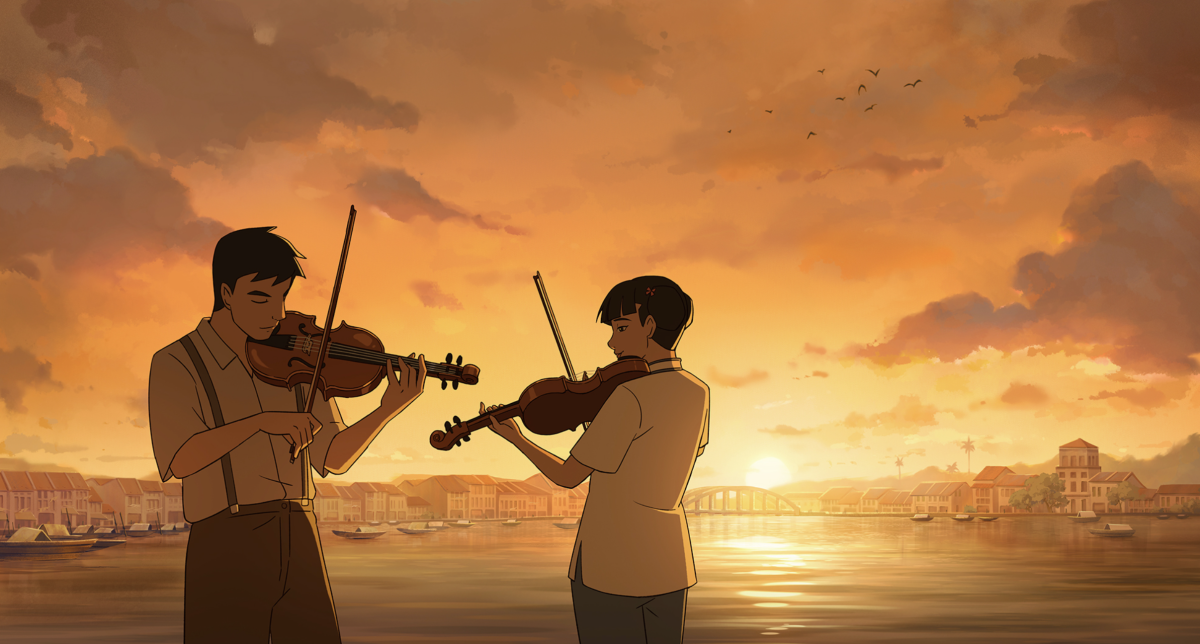
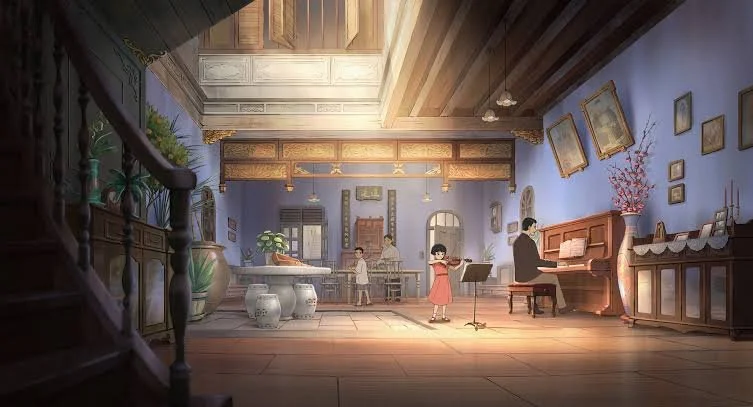
An aspect of Singapore’s rich cultural heritage is portrayed through protagonist Fei’s Peranakan heritage. The production team worked closely with the NUS Baba House, which was used as a reference for Fei’s Peranakan childhood home, faithfully animating its tiles, furniture, kebayas, culinary motifs and more.
Moreover, animation as a digital storytelling tool has been used here to explore beyond material culture to the emotional experience and thematic history of the Peranakan community.
Interactivity in the Digital Realm
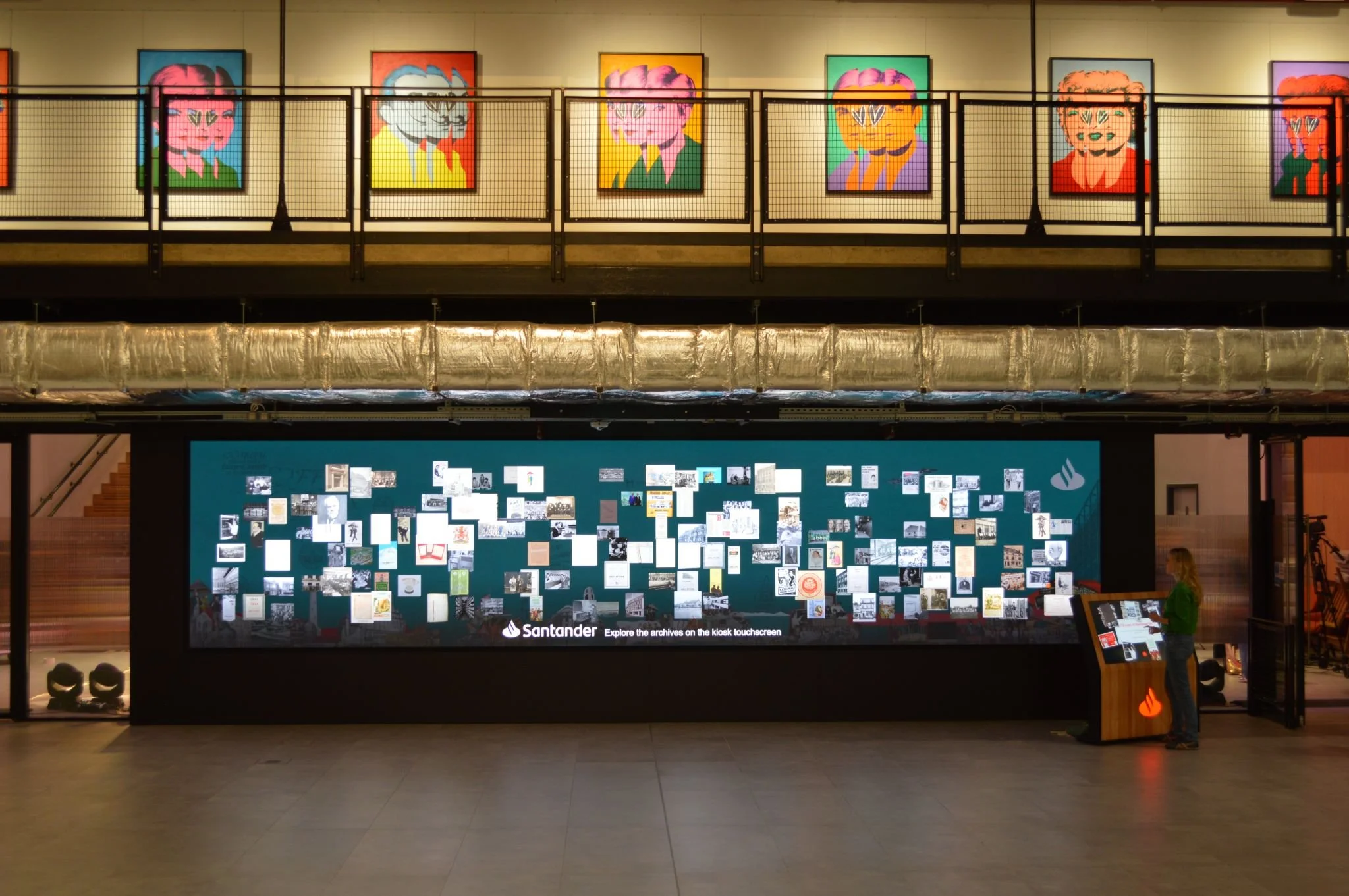
Digital interactive LED wall created for Santander’s 175th anniversary in 2024 by History Ink
The beauty of digital media is its ability to be interactive and engaging. The last few decades have seen much encouragement for more hands-on participation in the heritage space. As such, today heritage projects prize themselves on creating immersive and fun learning experiences. Digital storytelling has especially aided this push for interactivity in many ways – participants nowadays often interact with a combination of technologies like touchscreens, Virtual Reality (VR), or Augmented Reality (AR). The visitors journey beyond a passive viewing experience, instead they touch, explore, learn and remember through multisensory experiences.
One apt example was the digital interactive LED wall created for Santander’s 175th anniversary in 2024 by History Ink. Eye-catching and responsive, the animated digital timeline shared the highlights of the Santander’s archives collections. Visitors were able to examine historical documents, listen to audio recordings and flick through old photographs and pamphlets. Mixed into this experience, which took place at Santander’s UK head office at Unity Place MK, were themes of democracy, financial inclusion and the endeavour to provide secure investments and homes. You can read more about this project here.
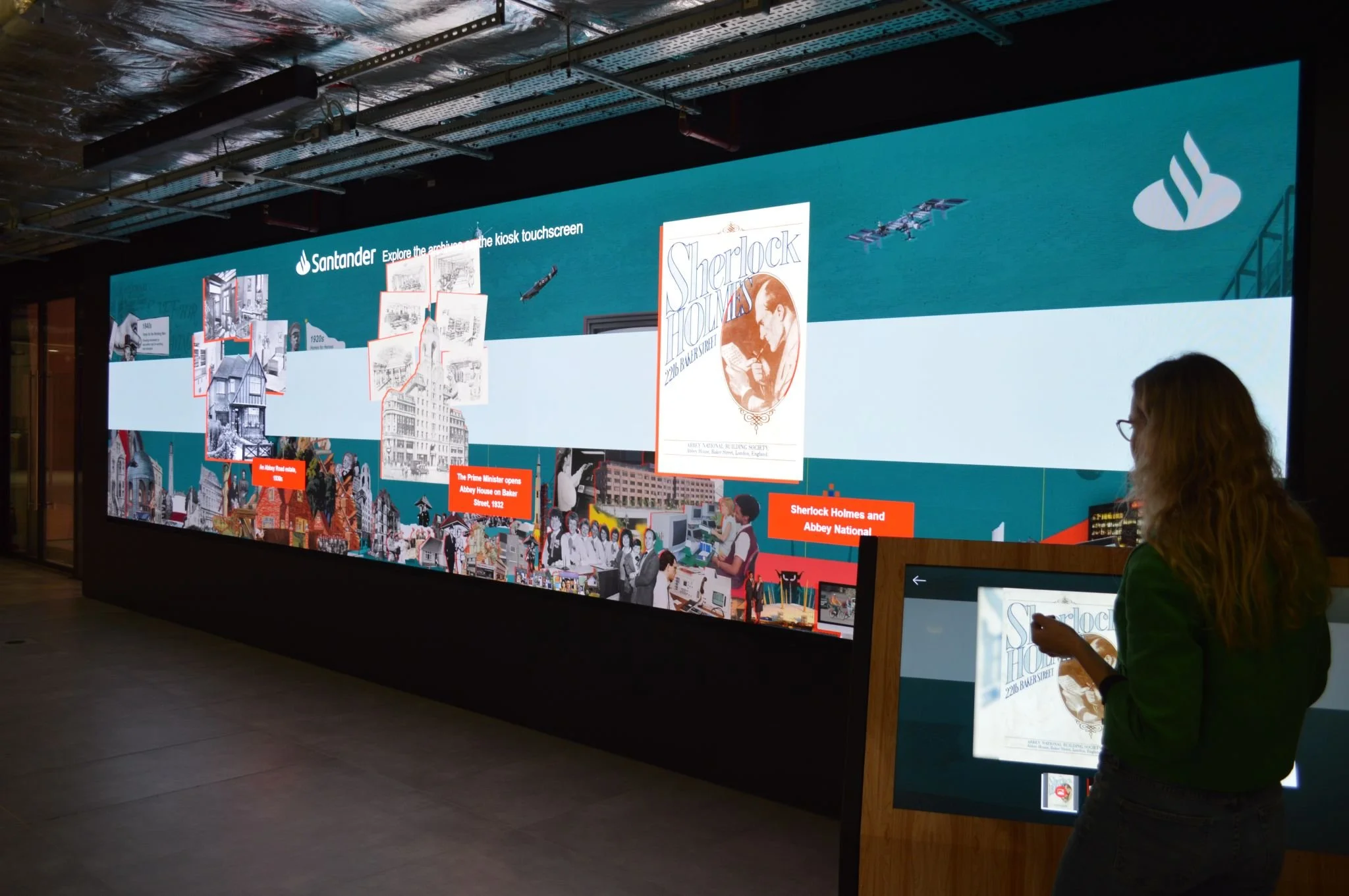
Visitors were able to interact with the wall to examine historical documents, listen to audio recordings and flick through old photographs and pamphlets.
Respect and accuracy in digital storytelling
Of course, just as it is when using any form of storytelling to remember and share, there must be a commitment to representing cultural heritage and historical events with accuracy and respect. Especially so, when it comes to intangible aspects such as stories, songs, crafts and rituals. It is a difficult but paramount skill to balance historical accuracy and creative freedom, always keeping in mind that the goal is to keep the memory of the culture alive, to express as vividly as one can, the entirety of its multi-faceted complexity.
And as the examples explored above have shown us, digital storytelling brims with possibilities to convey the immensity of our human heritage. By harnessing the potential of technology, we can bridge the gaps between different cultures and histories, and better share, understand and empathise with one another and our pasts.
References
https://visualskies.com/heritage-and-archaeology-3d-scanning/drone-scanning-for-heritage/
https://educationalvoice.co.uk/cultural-heritage-animation-projects/
https://www.museumnext.com/article/how-virtual-reality-is-bringing-historical-sites-to-life/
Examples:
3D modelling and drones: Netflix’s Queen Charlotte https://www.instagram.com/p/Cr3kQk1MDAH/?img_index=2
AI – The Met’s Dendur and Oceania Arts https://www.metmuseum.org/hubs/the-met-in-vr
For Animation: NDP2021 animation video https://www.youtube.com/watch?v=K_2PgtrQcVE, The Violinist https://www.peranakan.org.sg/theperanakanmagazine/elevating-heritage-through-animation-the-violinist/
VR: Virtual Songlines https://virtualsonglines.com/ & https://www.aboriginalheritage.org/wp-content/uploads/Yarnuping-4-Aboriginal-People-Comics-and-the-Virtual-World.pdf; TIME’s Dunkirk https://www.youtube.com/watch?v=caCRw9eCKeE
Heritage Projects: Santander’s 150th Anniversary digital interactive timeline https://www.history-ink.com/journal/digital-archive-wall-for-santander-uk